On January 27, 1945, Soviet troops liberated Auschwitz and the 7,000 starving victims trapped inside — then uncovered macabre warehouses filled with the personal belongings of countless dead prisoners.
Warning: This article contains graphic descriptions and/or images of violent, disturbing, or otherwise potentially distressing events.
As World War II drew to a close in January 1945, a group of Soviet scouts stumbled upon a strange camp in the Polish city of Oświęcim, which the Germans called Auschwitz. The liberation of Auschwitz was not part of the soldiers’ plan, but it would soon stand as one of the most defining events of the Second World War.
Established by the Germans in 1940, Auschwitz quickly became the deadliest Nazi concentration camp. According to HISTORY, 1.1 million of the 1.3 million people sent to Auschwitz — a full 85 percent — died there. Hundreds of thousands of people were shot, gassed, hanged, and starved to death.
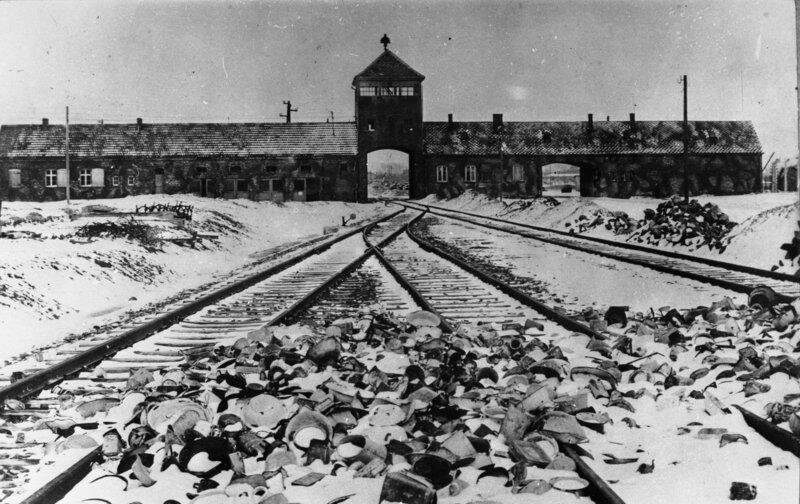
Stanislaw Mucha/German Federal Archives via Wikimedia CommonsThe entrance of Auschwitz, where an estimated 1.1 million people were killed by the Nazis during World War II.
Thousands more died in the camp’s final days when Nazi soldiers tried to cover up their crimes and move some 60,000 prisoners to the German-held city of Wodzislaw. An estimated 15,000 people died during the bitterly cold death march, many of them shot by German soldiers as they struggled to keep up.
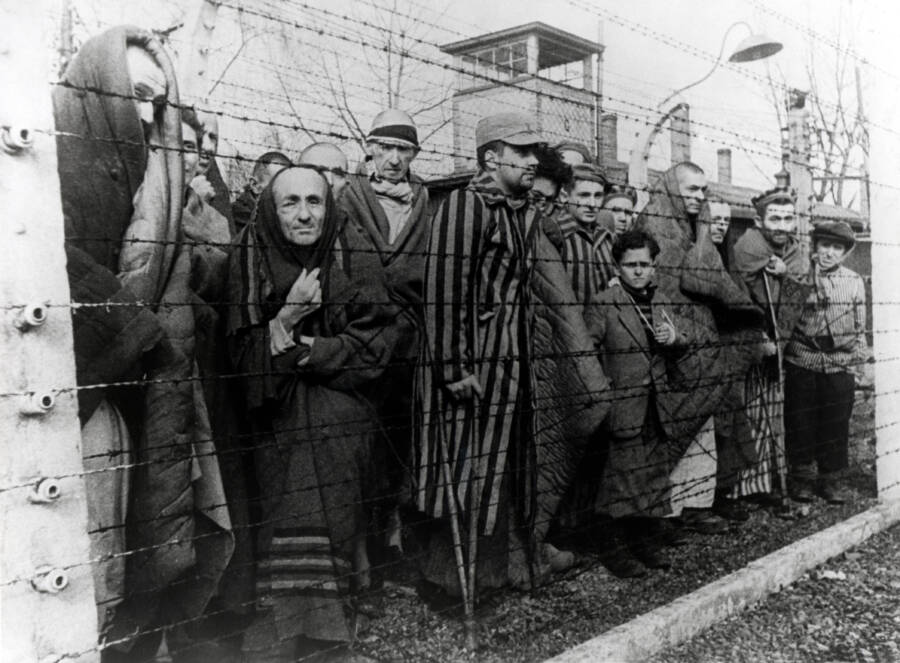
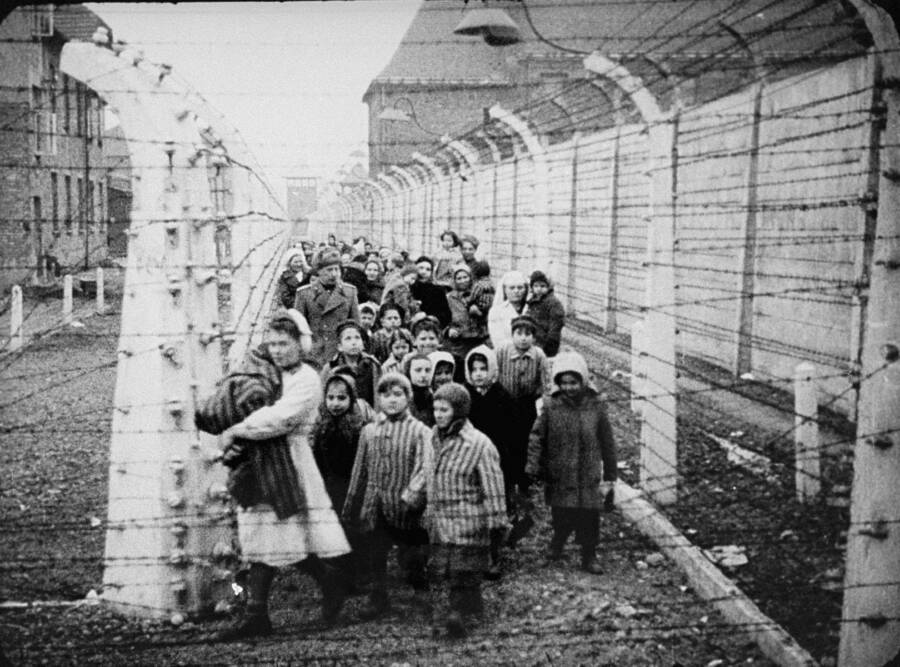
Back at the camp, however, the Soviet soldiers who entered Auschwitz on Jan. 27, 1945, found those that the Nazis had left behind: the gravely ill, children, and people who had managed to hide from the guards.
“Only the highest-ranking officers of the General Staff had perhaps heard of the camp,” Soviet soldier Ivan Martynushkin explained to the Times of Israel, noting that he and his fellow soldiers were surprised to find people standing behind the barbed wire. “We knew nothing.”
They discovered that the camp still held as many as 9,000 people, as well as gruesome evidence of the more than one million who had died. Soldiers found 370,000 men’s suits, 837,000 women’s garments, and almost eight tons of human hair. According to HISTORY, they also came across 44,000 pairs of shoes and 88 pounds of eyeglasses.
But though horrifying, the liberation of Auschwitz was also joyful.
“We could tell from their eyes that they were happy to be saved from this hell,” Martynushkin said. “Happy that now they weren’t threatened by death in a crematorium. Happy to be freed.”
Ten-year-old Eva Mozes, who had been sent to Auschwitz the year before with her twin sister, recalled that the Red Army soldiers gave out “hugs, cookies, and chocolate,” according to HISTORY.
“We were not only starved for food,” she said, “but we were starved for human kindness.”
And Paula Lebovics, who was 11 years old during the liberation of Auschwitz, remembered being overwhelmed by the Soviets’ kindness. Recalling that one soldier approached her with tears streaming down his face and an offer of food, she told the USC Shoah Foundation that she thought, “You mean somebody out there cares about me?”
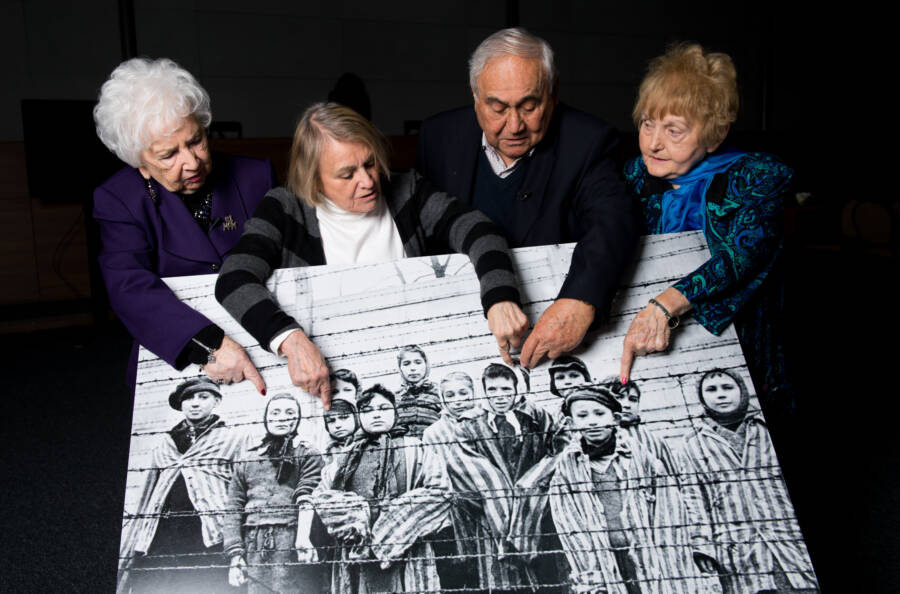
Ian Gavan/Getty ImagesPaula Lebovics, second from the left, stands with other Holocaust survivors and points at photos of them as children taking during the Auschwitz liberation.
Stories from Auschwitz were initially overshadowed by the liberation of the first major Nazi concentration camp, Majdanek. But as Auschwitz survivors came forward with their stories and the full horror of the death camp dawned on the world, Auschwitz became known as World War II’s most notorious Nazi concentration camp.
After the war, the site was turned into a museum and memorial. It seeks to honor and remember those who died there, but also to keep the memory of the Holocaust alive as a warning for future generations.
“People should look at this place and think about our moral responsibility,” Pawel Sawicki, a guide at the Auschwitz museum, told NPR. “This is not an anthropological discovery of ‘Oh, people 75 years ago were able to do something like this,’ and we are surprised. They [still] are able to do it. They did it before. And people still hate each other.”