The closest thing to a palace in the US is the White House. But, whereas palaces are the legion of kings and queens, government buildings have a more sober and functional air to them. With the White House in Washington DC, the original structure and decoration of this storied building has been compromised and changed many times over the centuries. In the late 1940s the problems with this grand building came to a tipping point when a piano leg poked through the rotting wooden floor into the room below. The president at the time was Harry S. Truman, who had long complained in letters to his loved ones about how drafty, creaky, and weird the building was. Now it was time to fix the problems, but as with many projects there was a lot more work to be done than was first thought. And, as with many a historical building there were secrets hiding behind the walls.
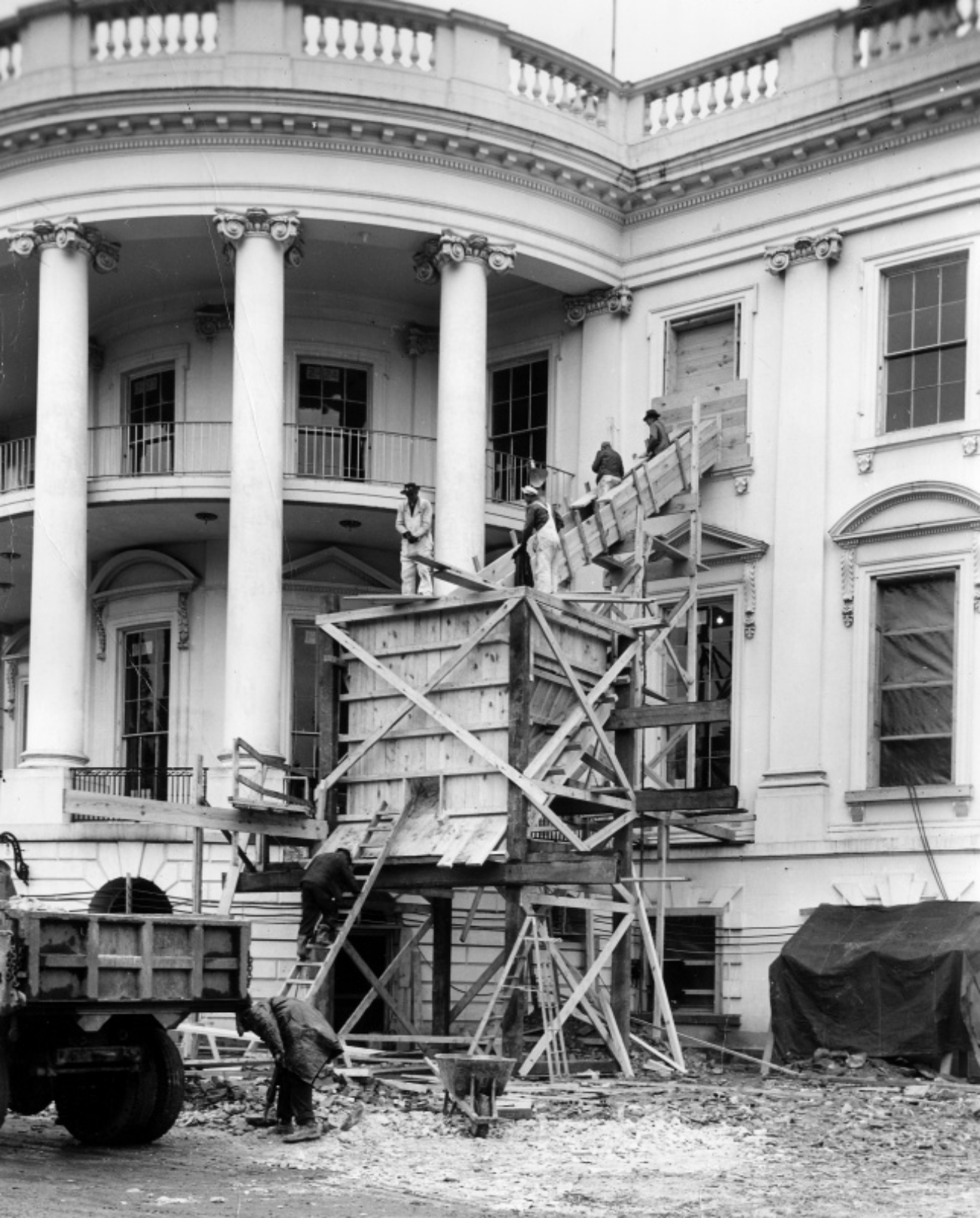
The White House has been through quite a lot in its time. The Burning of Washington in 1814 was an attack by the British forces on the newly-formed republic and the White House was set on fire. The damage from the conflagration and the heavy rains that followed the burning meant that the building underwent a significant amount of damage. The structure was rebuilt, but some issues from these events were still affecting the White House 130 years after the fact.
The White House has also been renovated for modern conveniences over the years, including adding gas, electricity, and plumbing. Each set of changes also brought with them either some weakening of the structure or covering up of older architectural details. What was left was a shivering building with structural issues instead of the stately home of the POTUS it appeared to be on the outside.
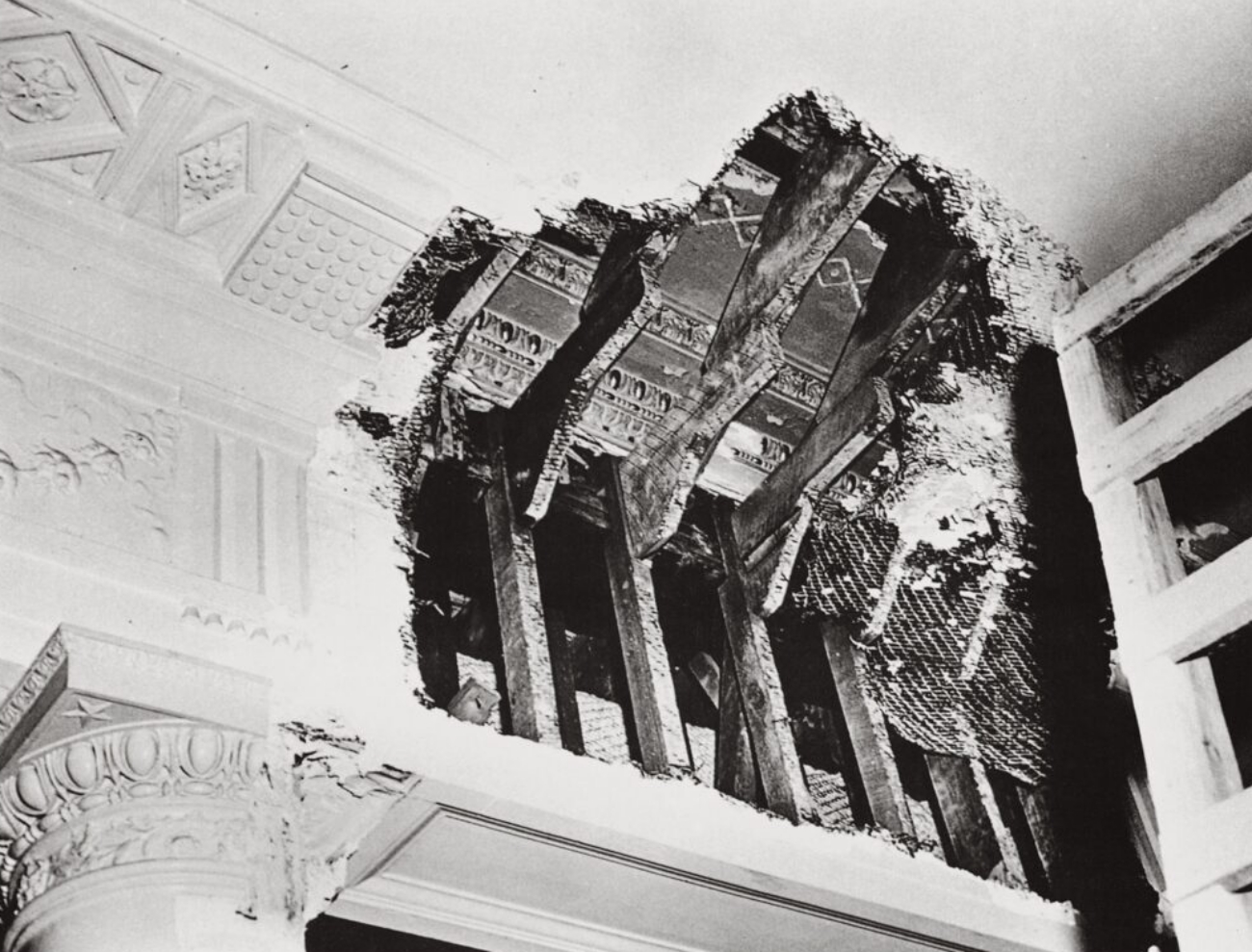
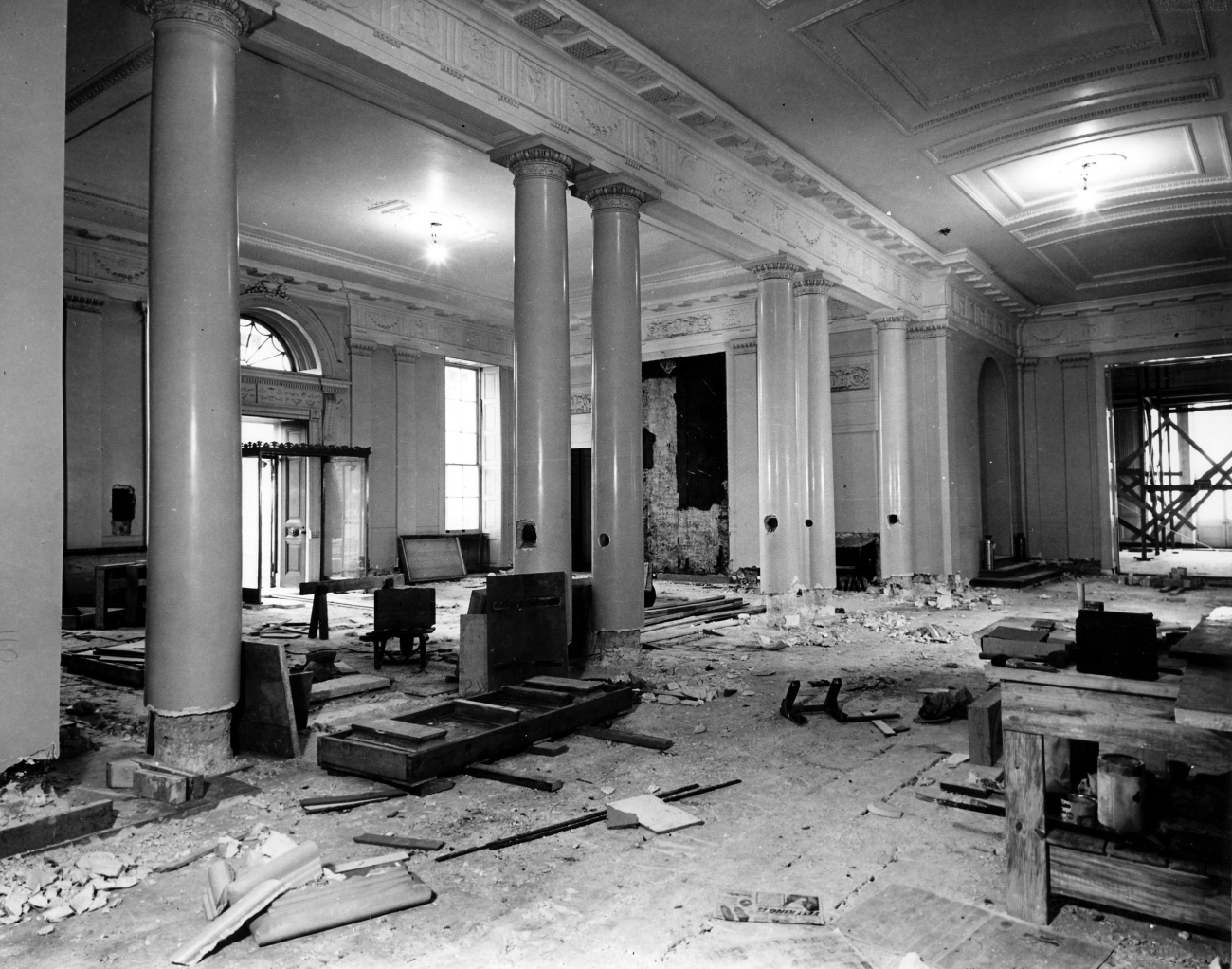
Much of the building had to be taken down to bare bones.
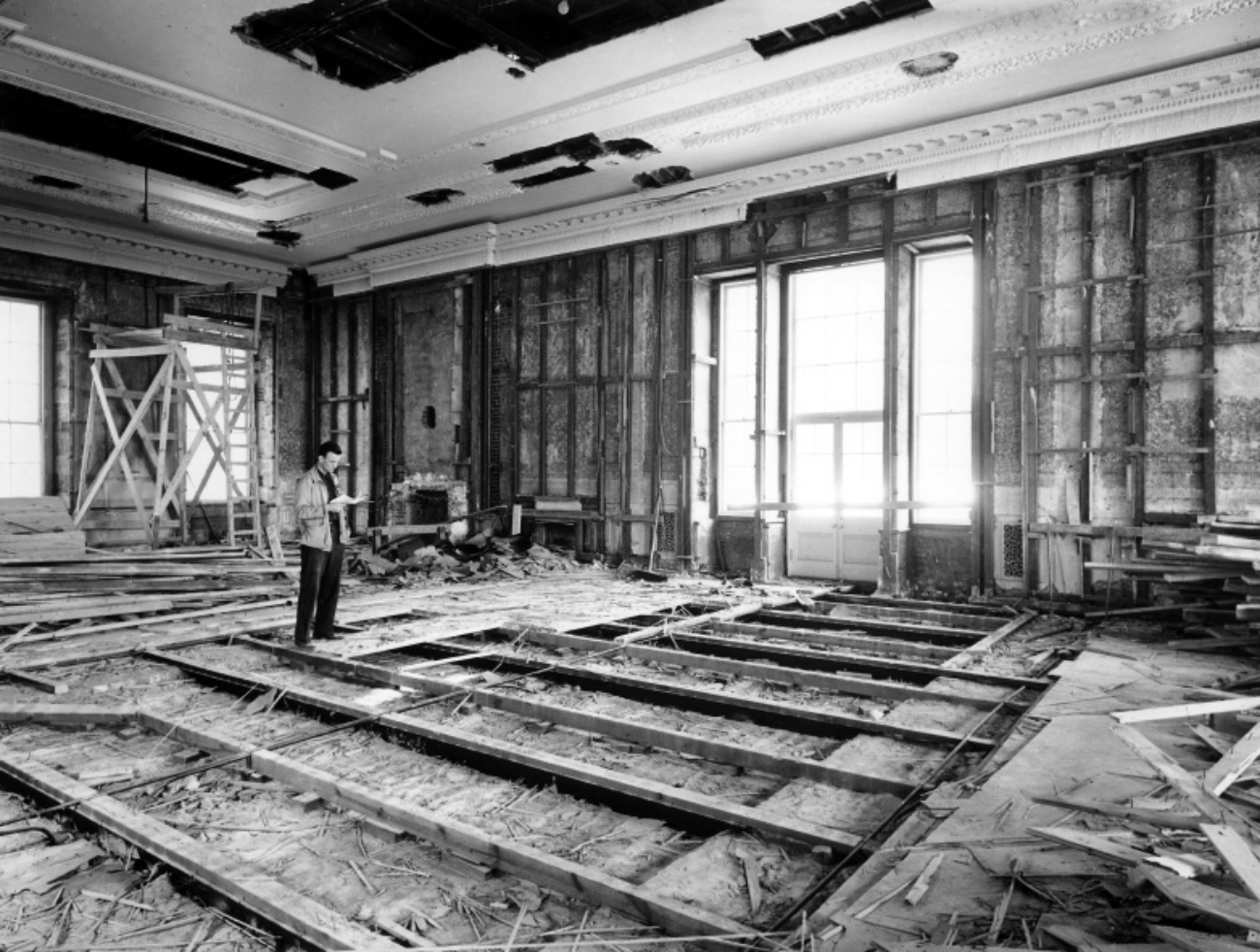
In particular the basement looked like some sort of ancient ruin, with a remarkable amount of material removed from the premises in order to rebuild.
At the same time that new walls, supports, floors, and beams were being installed, the planners also took this opportunity to add updated conveniences like modern duct work for heating and cooling.
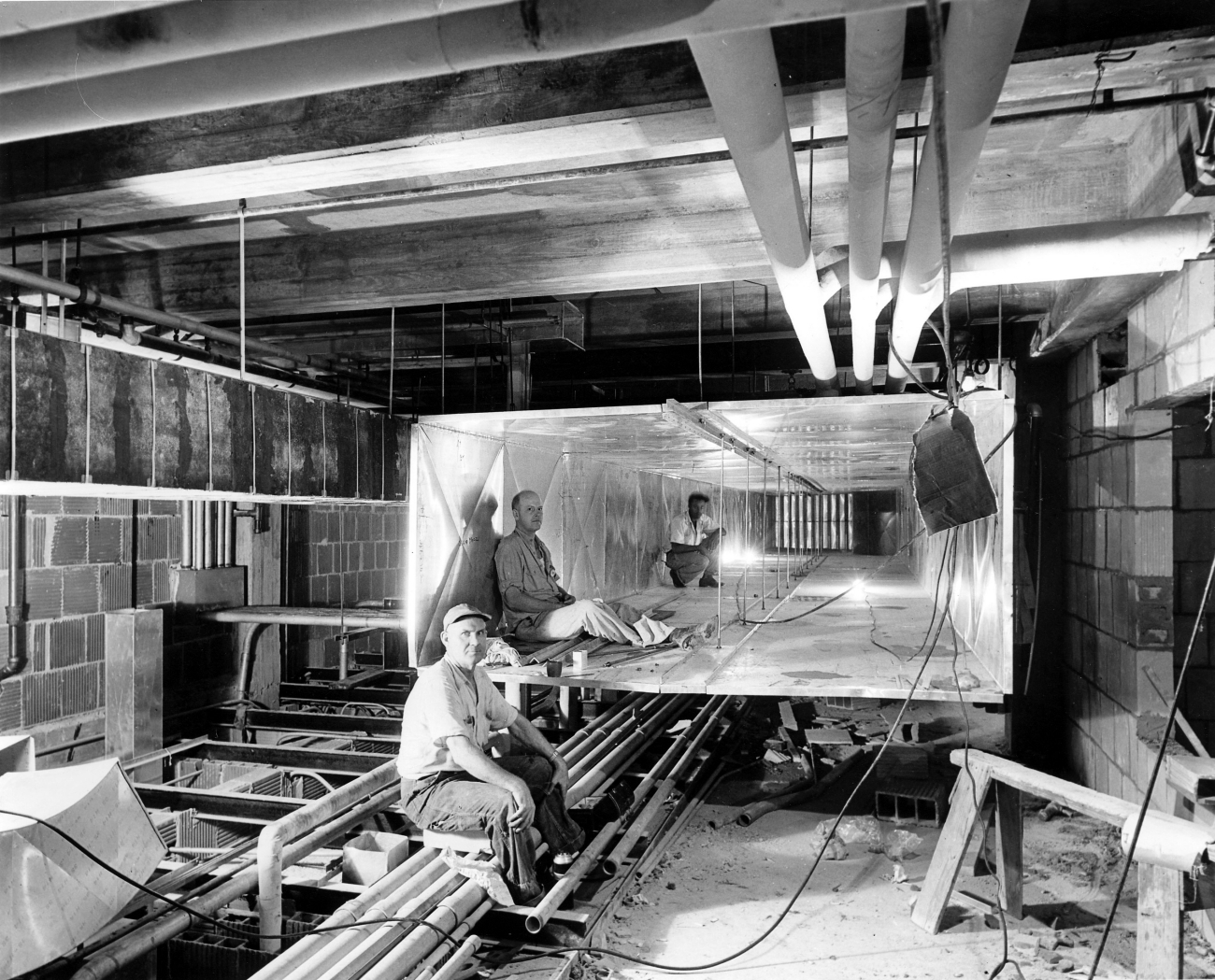
The work took place between 1948 and 1952, with the completed renovation serving at the backdrop for First Lady Jackie Kennedy’s changes in the early 1960s. She often gets credit for bringing the White House into the modern consciousness with her televised tour and her formation various groups to help sustain further improvements to the building. But, it was the Truman renovations that made her work possible and shored up the building for decades to come.
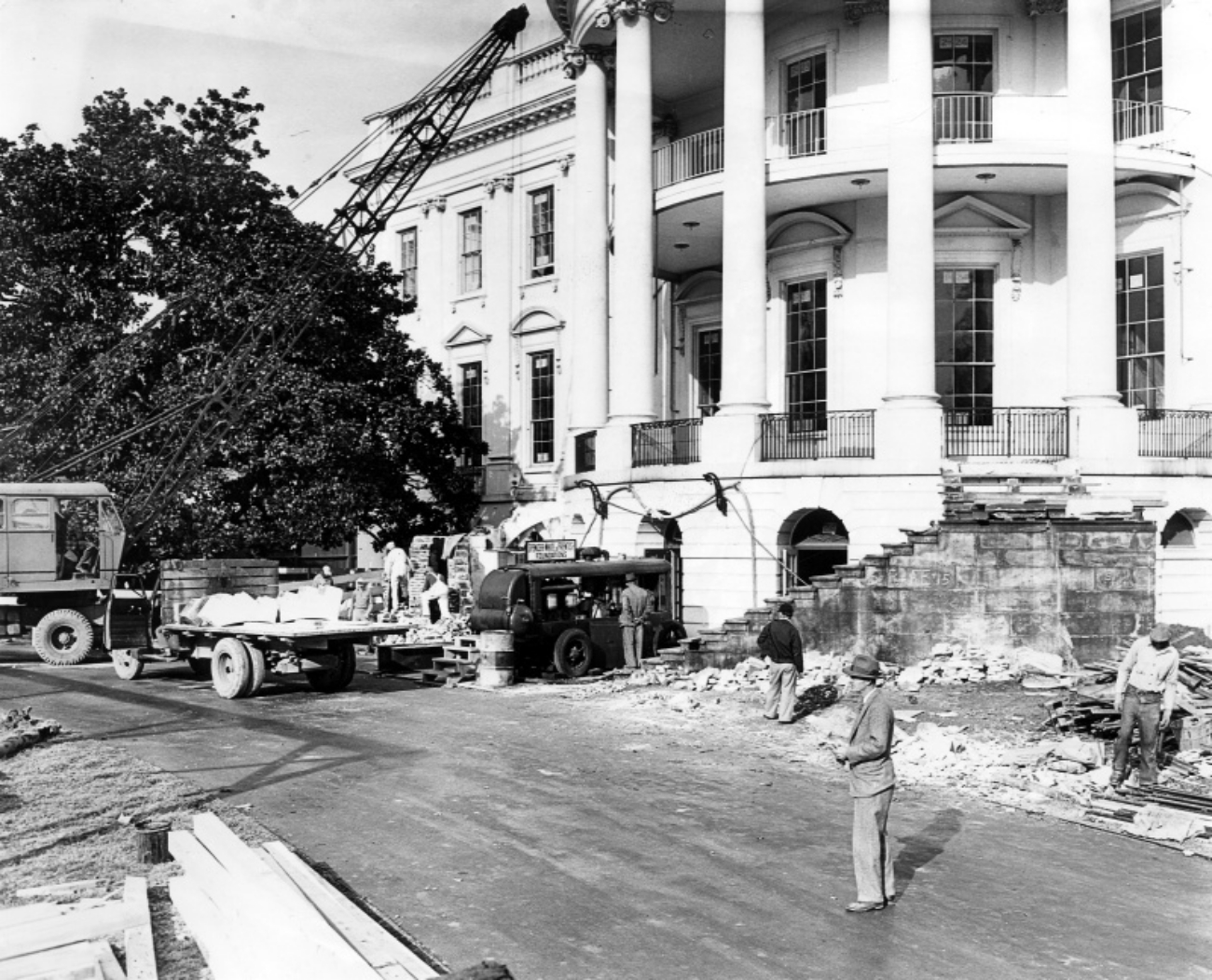
As for the interiors, recent decorations from 1902 and from 1945 were re-used and only a modest budget was approved for re-decoration. Much of the older furnishings were put back into the White House and changes like upgrading the wooden mantlepieces to marble and re-plating the chandeliers took precedence over personal tastes or modern fashions.